

Introduction
A traveler scrolling Instagram on a Friday evening finds two homestays in Mussoorie. Same price, same views, same number of rooms. One has a hand-drawn logo, warm wooden-toned visuals, and a consistent feed that feels like a place you’d want to wake up in. The other has a stretched logo, five different fonts, and photos with mismatched filters. Booking decisions in the hills are made in seconds, and design does most of the talking.
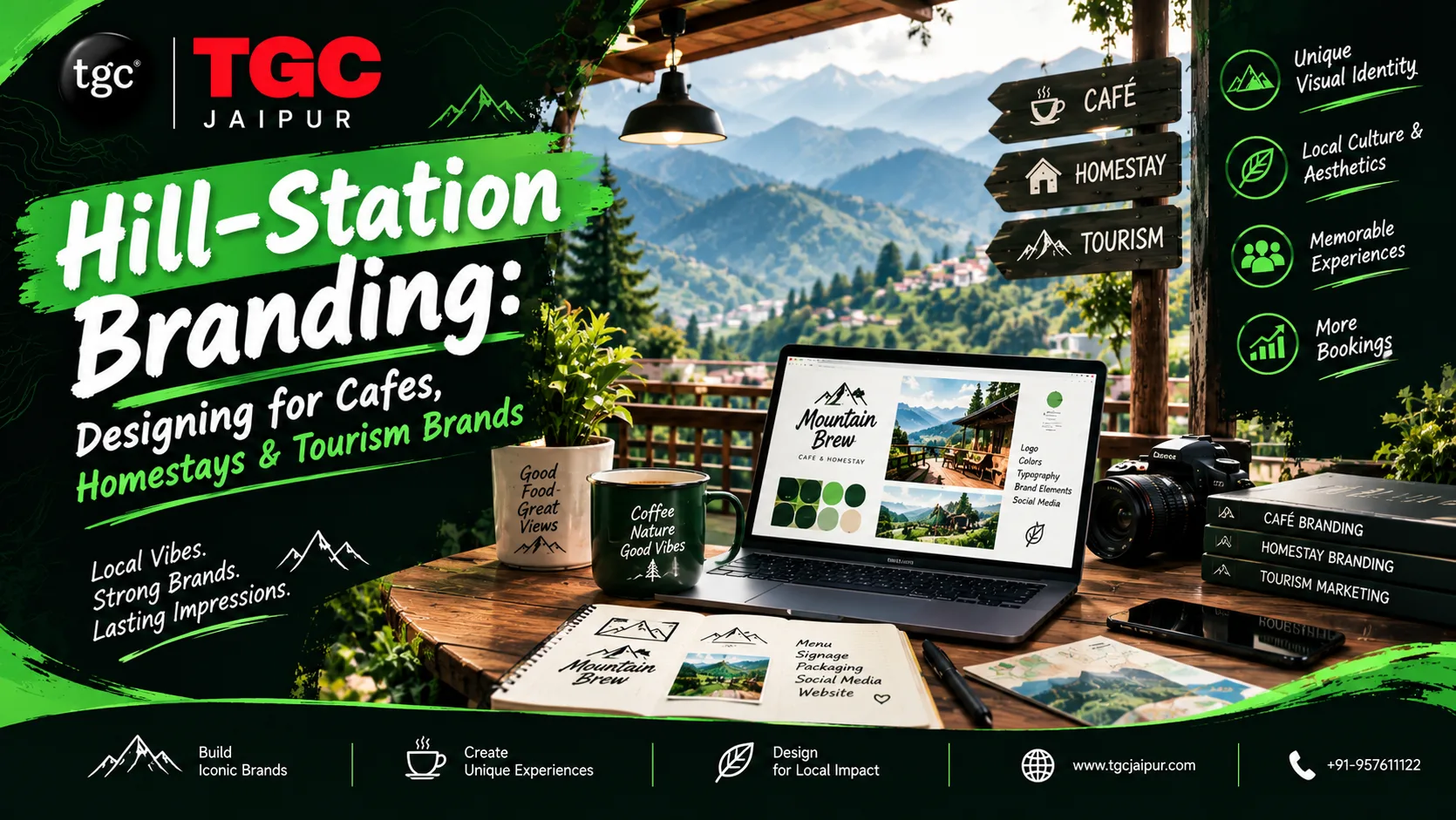
Across Uttarakhand, from Dehradun’s café lanes to the ridges of Mussoorie, Landour, and Rishikesh, small hospitality brands are discovering that good design is no longer a luxury reserved for big hotel chains. This guide breaks down how hill-station branding actually works, what makes it different from city branding, and how designers can build it well.
Why Hill-Station Branding Is a Different Design Problem
Designing for a Delhi cloud kitchen and designing for a Landour café are not the same job. Hill-station brands sell something city brands rarely do: a feeling tied to a place.
- The product is an experience, not just a service. Guests aren’t only buying a room or a coffee; they’re buying quiet mornings, mountain light, and a story they’ll retell
- Customers decide visually and remotely. Most travelers choose where to stay or eat from photos, reels, and Google listings long before they arrive
- Seasonality shapes everything. Summer rush, monsoon lull, and winter snow-chasers all need different messaging from the same brand
- Authenticity is the currency. Travelers can spot a generic “mountain stock photo” brand instantly, and they tend to trust places that feel genuinely rooted in the local landscape and culture
The Visual Language of the Hills
Strong hill-station branding usually draws from a few recurring design sources. The skill lies in using them with restraint, so the result feels specific rather than clichéd.
| Design Element | What It Draws From | How It Shows Up |
|---|---|---|
| Color palette | Pine green, slate, mist grey, deodar brown, sunset amber | Logos, menus, signage, social templates |
| Texture | Wood grain, stone, wool, handmade paper | Backgrounds, packaging, print collateral |
| Typography | Hand-lettered, serif, or slightly rustic type with warmth | Logos, menus, signboards |
| Illustration | Mountain ridgelines, birds, trees, local flora | Icons, labels, merchandise, wall art |
| Photography style | Natural light, steam, fog, real people over staged shots | Websites, Instagram, listing platforms |
The most effective brands pick two or three of these and use them consistently, rather than stacking every mountain cliché into a single logo.
Branding for Hill-Station Cafes
Cafes in places like Dehradun, Mussoorie, and Rishikesh compete on mood as much as menu. Branding here has to work on a tiny signboard, a paper cup, and a phone screen alike.
What a hill café brand typically needs:
- A logo that scales down well. It must stay readable on cups, stamps, and Instagram profile circles, so simple marks outperform intricate illustrations
- A menu that matches the mood. Typography, spacing, and paper choice should feel like the café, whether cozy and rustic or minimal and modern
- Packaging and takeaway design. Cups, sleeves, bags, and boxed baked goods are walking advertisements, especially in tourist-heavy lanes
- A signature visual detail. One memorable element, such as a mascot, a pattern, or a color, helps travelers remember and recognize the café after a single visit
- A photo-friendly corner. Not strictly graphic design, but branded walls and signage placement quietly drive organic Instagram tagging
Branding for Homestays
Homestays sell trust and warmth more than any other category in this space. Guests are staying in someone’s home, often in a place they’ve never visited, and the branding has to answer a silent question: will I feel welcome here?
Key design priorities:
- A human, story-led identity. Brands that reflect the family, the house, or the village’s story tend to feel safer and more inviting than generic “resort-style” branding
- A consistent listing presence. The same logo, color tone, and photo style across Google Business Profile, Instagram, booking platforms, and the property’s own website builds recognition and credibility
- Clear, friendly wayfinding. Hill roads are confusing; well-designed signboards, entry markers, and printed arrival cards genuinely improve the guest experience
- Welcome collateral. A simple, well-designed welcome card, local map, or house-rules sheet makes a small property feel thoughtfully run
- Seasonal flexibility. A strong core brand with adaptable social templates lets the property promote snow season, monsoon retreats, or festival stays without looking inconsistent
Branding for Tourism Brands and Experiences
Trek operators, adventure companies, travel agencies, and local experience providers face a slightly different challenge: they sell confidence and excitement at the same time.
| Tourism Brand Type | Design Priority |
|---|---|
| Trek and adventure operators | Bold, energetic identity with strong safety and trust signals |
| Local tour and travel agencies | Clean, credible branding with clear itinerary and pricing layouts |
| Wellness, yoga, and retreat brands | Calm, spacious design with natural tones and gentle typography |
| Local product and craft brands | Packaging and labels that communicate origin, authenticity, and care |
For these brands, graphic design extends well beyond the logo into brochures, itinerary PDFs, social media carousels, merchandise, vehicle branding, and website visuals.
Common Mistakes in Hill-Station Branding
- Overusing mountain clichés. A triangle mountain with a sun behind it describes a thousand brands; specificity wins
- Inconsistent presence across platforms. A great logo on a signboard and a different one on Instagram quietly erodes trust
- Ignoring legibility. Beautiful hand-lettering that can’t be read from a moving car or a small phone screen defeats its purpose
- Using generic stock photography. Real photos of the actual property, food, and people almost always outperform polished but anonymous images
- Designing only for peak season. Brands need flexible systems that stay relevant in monsoon and off-peak months too
- Skipping the basics of print. Colors that look rich on screen can turn muddy in print without proper file preparation
A Simple Branding Process Designers Can Follow
- Discover the story. Talk to the owner about the place, the people, and what guests remember most
- Study the context. Look at nearby competitors and the visual cues of the surrounding landscape and culture
- Build the core identity. Logo, color palette, typography, and one or two signature visual elements
- Extend it into real touchpoints. Menus, signage, packaging, social templates, listing visuals, and welcome materials
- Create simple guidelines. A short brand sheet helps owners and staff stay consistent without needing a designer for every small task
- Test it in the real world. Check how it looks on a cup, a signboard, a phone screen, and a printed menu before finalizing
The Opportunity for Designers Based in Dehradun
Dehradun sits at the center of this demand. As the gateway to Mussoorie, Rishikesh, and the wider Garhwal region, designers here are close to a large, growing cluster of hospitality and tourism businesses that need professional branding but often can’t afford big-city agencies.
- Freelance and retainer projects with cafes, homestays, and boutique stays across the region
- In-house or agency roles with hospitality groups, travel brands, and tourism marketing teams
- Packaging and product branding for local food, wellness, and handicraft businesses selling to tourists
- Remote work for clients elsewhere, built on a strong portfolio of real hospitality projects
A portfolio containing even two or three well-executed hill-station branding projects, such as a café identity, a homestay brand system, or a trek operator’s collateral, is a genuinely distinctive asset that stands out from generic logo exercises.
Skills Every Hospitality Brand Designer Should Build
| Skill | Why It Matters |
|---|---|
| Logo and identity design | The foundation every other touchpoint builds on |
| Typography and color theory | Creates mood and consistency across materials |
| Packaging and print preparation | Essential for cups, menus, labels, and signage |
| Social media design | Instagram is the primary storefront for most hill-station brands |
| Basic photography direction | Helps clients capture images that match the brand |
| AI-assisted design tools | Speeds up concepts, mockups, and quick client turnarounds |
Where to Build These Skills in Dehradun
TGC Dehradun’s Graphic Design Course covers exactly this toolkit, including branding, typography, color theory, packaging, and social media design alongside AI-assisted workflows. The hands-on, project-based format makes it entirely realistic to build portfolio pieces like a café identity or homestay brand system as part of your training.
For a deeper, career-focused program, the Diploma in Graphic Design builds advanced branding, illustration, and digital design skills. Students who want a quick overview of the abilities every strong designer needs can also read this guide on skills you need to become a graphic designer. And since most hospitality brands also need a website, the Web Designing Course is a useful companion for designers who want to deliver complete brand-plus-web packages.
Final Thoughts
Hill-station branding is about translating a feeling, the quiet, the light, the warmth of a place, into visuals a traveler can trust in a few seconds. For cafes, homestays, and tourism brands across Uttarakhand, thoughtful design has quietly become one of the most effective ways to stand out in a crowded, visually driven market.
For designers in Dehradun, that is a real, local opportunity: a steady stream of hospitality businesses that need skilled, culturally aware branding, and a chance to build a portfolio that tells a story no generic template can match.
Ready to build branding skills for the hospitality and tourism sector? Explore TGC Dehradun’s Graphic Design courses and start creating portfolio-ready work.