

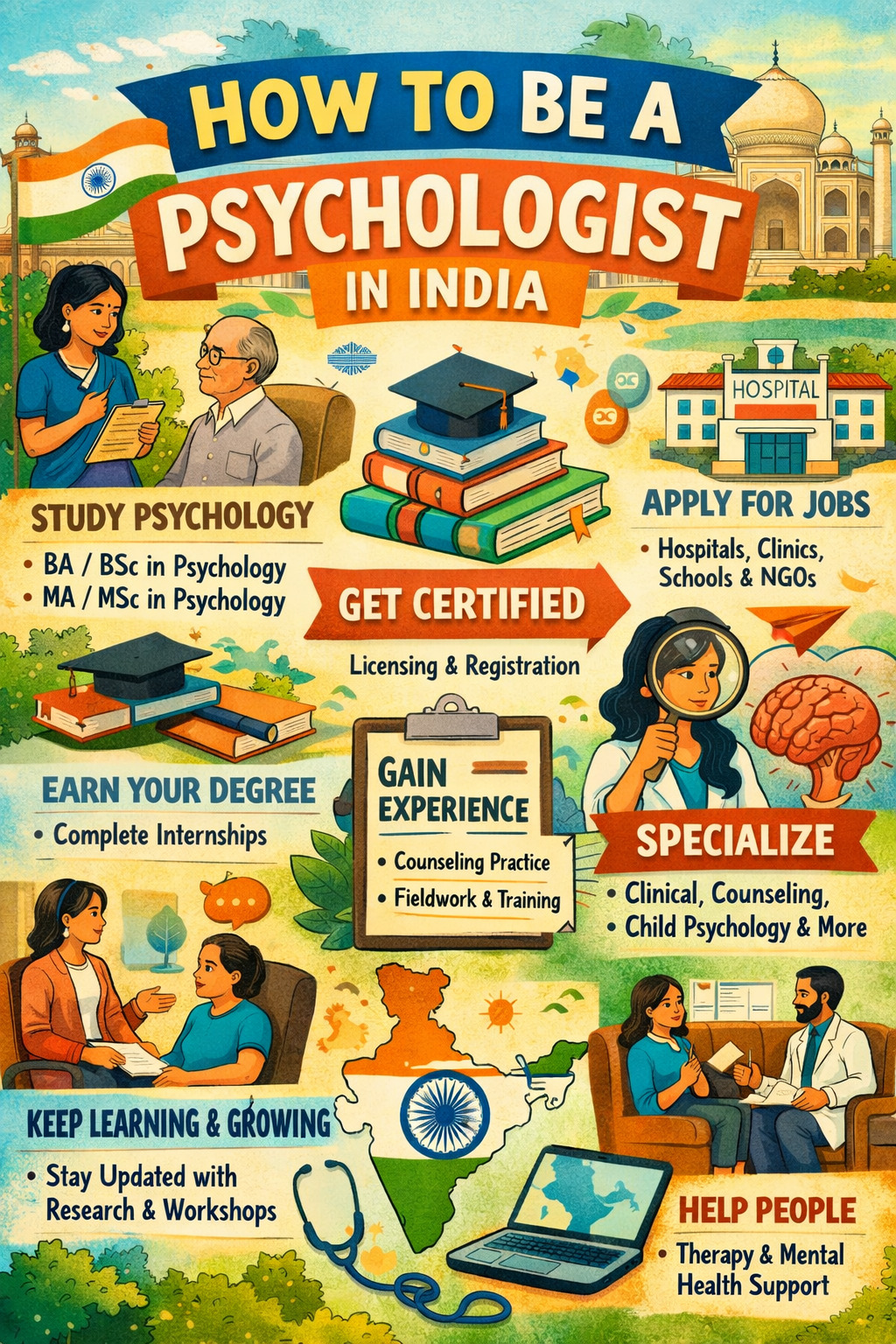
Becoming a psychologist in India requires a solid understanding of the field and a commitment to personal and professional growth. We need to reflect on the educational path, from a bachelor’s degree to potential doctoral studies. Along the way, we’ll explore essential skills and practical experiences that shape our practice. As we navigate this journey, let’s also contemplate how ethical considerations and ongoing education play vital roles in our development. What steps will you take first?
Key Takeaways
- Complete a bachelor’s degree in psychology, followed by a master’s degree for specialization, and consider pursuing a doctoral program for advanced practice.
- Gain practical experience through internships, volunteering, and community outreach to understand diverse psychological needs and enhance skills.
- Develop essential skills such as empathy, active listening, analytical thinking, and problem-solving to connect effectively with clients.
- Explore various career paths in private practice, hospitals, research, corporate sectors, and educational psychology to find your niche.
- Adhere to ethical practices, maintain cultural sensitivity, and commit to continuing education through workshops, courses, and professional networking.
Understanding the Role of a Psychologist in India
When we think about the role of a psychologist in India, it’s essential to recognize the diverse responsibilities they undertake in various settings. Psychologists navigate a complex landscape shaped by cultural influences and societal expectations. They work not only in clinics and hospitals but also in schools, corporate environments, and community centers, addressing mental health issues unique to our society. By understanding the interplay of tradition and modernity, psychologists can effectively tailor their approaches to suit individual needs. They often act as mediators, helping clients reconcile personal challenges with societal pressures. This adaptability allows them to foster resilience and promote well-being among diverse populations. Ultimately, their role is fundamental in bridging the gap between mental health awareness and cultural sensitivity in India.
Required Educational Qualifications to Become a Psychologist
To effectively support the diverse roles psychologists play in India, obtaining the right educational qualifications is key. We need to pursue relevant psychology degrees and certification programs to excel in this field. Here’s a quick rundown of what we should consider:
- A bachelor’s degree in psychology or a related field
- A master’s degree in psychology for specialization
- Doctoral programs for advanced practice and research roles
- Certification programs to enhance skills and meet professional standards
These qualifications not only provide us with essential knowledge but also equip us with the tools to engage with clients effectively. By taking these steps, we can guarantee a solid foundation for our careers as psychologists in India.
Choosing the Right Specialization in Psychology
How do we choose the right specialization in psychology to align with our interests and career goals? First, we should reflect on what fascinates us most about human behavior. If we’re intrigued by how people think and process information, cognitive psychology might be our path. This specialization dives into mental processes, which can lead to careers in research or clinical settings. On the other hand, if we’re drawn to understanding how social interactions shape behavior, social psychology could be the ideal fit. This field explores group dynamics and societal influences, opening doors in areas like community work or corporate training. By evaluating our passions and strengths, we can make informed decisions about which specialization will best suit our aspirations.
Essential Skills for Aspiring Psychologists
As aspiring psychologists, we need to build a strong foundation of essential skills that will guide our practice. Empathy and active listening help us connect with clients on a deeper level, while analytical and critical thinking enable us to assess situations effectively. By honing these skills, we can better support those who seek our help.
Empathy And Active Listening
While many skills are essential for aspiring psychologists, empathy and active listening stand out as foundational elements in our practice. These skills help us build therapeutic rapport and foster client-centered approaches. To enhance our emotional intelligence, we can incorporate various techniques:
- Empathy exercises to deepen our understanding of clients’ feelings
- Active listening techniques, like reflective listening, guarantee clarity
- Nonverbal cues awareness to interpret unspoken emotions
- Validation strategies that affirm our clients’ experiences
Analytical And Critical Thinking
To succeed as psychologists, we must harness analytical and critical thinking skills that enable us to evaluate complex situations and make informed decisions. Developing our analytical skills helps us break down information and identify patterns, which is essential in understanding our clients’ behaviors and thoughts. It allows us to assess various psychological theories and their applicability to individual cases.
Moreover, critical reasoning empowers us to question assumptions, weigh evidence, and consider alternative perspectives. This skill is significant when formulating treatment plans or conducting research. By refining these abilities, we can enhance our problem-solving capabilities, leading to better outcomes for our clients. In our journey as psychologists, embracing analytical and critical thinking will be instrumental in fostering our professional growth and effectiveness.
How to Gain Practical Experience in Psychology
To gain practical experience in psychology, we should consider internships that provide hands-on training and exposure to real-world situations. Additionally, volunteering in community programs can enhance our understanding of diverse psychological needs. Together, these opportunities can considerably enrich our journey in becoming skilled psychologists.
Internships In Psychology
Internships in psychology play an essential role in bridging the gap between theoretical knowledge and real-world application. By engaging in practical training, we not only deepen our understanding but also enhance our skills. Here are some ways to find valuable internship opportunities:
- Research local clinics that may offer internships or shadowing experiences.
- Network with professors and professionals in the field who can guide us to openings.
- Utilize online job boards specifying psychology internships to find listings.
- Join psychology associations that often have resources and connections for internships.
Volunteer Opportunities Available
While internships provide structured training, volunteer opportunities are equally essential for gaining practical experience in psychology. By engaging in community outreach, we can connect with diverse populations and understand their psychological needs. Volunteering at local NGOs or mental health organizations allows us to actively participate in mental health advocacy, promoting awareness and support for those in need. We can assist in workshops, support groups, or awareness campaigns, gaining invaluable insights into real-world challenges. These experiences not only enhance our skills but also help us build a network within the field. As we contribute our time and effort, we’ll develop empathy and a deeper understanding of the psychological landscape in our communities, paving the way for our future careers.
Navigating Licensure as a Psychologist in India
Maneuvering the licensure process as a psychologist in India can feel overwhelming, but understanding the key steps can make it manageable. Here’s what we need to focus on:
- Familiarizing ourselves with the licensure requirements set by the Rehabilitation Council of India (RCI)
- Completing a recognized psychology degree, typically at the master’s level
- Preparing for and passing any required exams for licensure
- Submitting our application through the appropriate registration processes
Career Paths for Psychologists in India
As we explore career paths for psychologists in India, we’ll find diverse opportunities that cater to different interests and skills. Whether we’re drawn to clinical psychology, educational roles, or industrial-organizational settings, there’s a path for everyone. Let’s look at how each of these fields offers unique contributions to society and personal fulfillment.
Clinical Psychology Opportunities
In exploring clinical psychology opportunities in India, we find a diverse landscape of career paths that cater to various interests and skills. As we investigate this field, we notice several promising options shaped by the latest clinical psychology trends and innovative therapy techniques:
- Private Practice: Many of us choose to work as independent practitioners, providing personalized therapy.
- Hospitals and Clinics: We can join multidisciplinary teams to treat patients with mental health disorders.
- Research and Academia: For those inclined towards study, engaging in research or teaching can be fulfilling.
- Corporate Sector: Companies seek psychologists for employee wellness programs, making this a lucrative option.
Educational Psychology Roles
Educational psychology offers a range of fulfilling roles for psychologists in India, each tailored to support learning and development. We can work as educational psychologists in schools, where we conduct educational assessments to identify students’ strengths and challenges. By collaborating with teachers and parents, we help create effective learning strategies that cater to individual needs.
Additionally, we may find opportunities in private practice, providing counseling and support to students facing academic pressures. Some of us might choose to work in educational institutions, focusing on curriculum development and training teachers in psychological principles. Whichever path we choose, our aim remains the same: to enhance the educational experience and foster a positive environment for learning and growth.
Industrial-Organizational Psychology Careers
While many of us may envision psychologists primarily working in clinical settings, industrial-organizational (I-O) psychology offers exciting career paths that focus on enhancing workplace dynamics and employee well-being. In this field, we can contribute to essential aspects of organizations, such as:
- Leadership development and training programs
- Talent management strategies to boost team performance
- Psychological assessments to foster workplace diversity
- Conflict resolution techniques that improve job satisfaction
Ethical Practices in Psychological Work
Ethical practices in psychological work are essential to fostering trust and ensuring the well-being of clients. We must adhere to established ethical guidelines that cover confidentiality practices and informed consent, which empower clients to make informed choices about their treatment. It’s vital to maintain professional boundaries and avoid dual relationships that could compromise our objectivity. Cultural sensitivity also plays a significant role in our practice, helping us understand and respect diverse backgrounds. When faced with ethical dilemmas, we should seek guidance and adhere to supervision standards to navigate complex situations. By committing to these principles, we not only uphold our profession’s integrity but also create a safe and supportive environment for those we serve.
Continuing Education for Psychologists in India
Maintaining ethical practices in our work is just the beginning of our journey as psychologists in India. To truly excel, we need to commit to continuing education. This helps us stay updated and improve our skills. Here are some effective ways to enhance our knowledge and network:
- Enroll in online courses for flexible learning.
- Attend professional workshops and continuing seminars to gain hands-on experience.
- Participate in certification programs for specialized skills.
- Engage in peer mentoring and attend research conferences to exchange insights.
Tips for Building a Successful Psychology Career
Building a successful psychology career in India requires a strategic approach and dedication. First, let’s focus on gaining a strong educational foundation. Pursuing advanced degrees and certifications can enhance our knowledge and skills. Engaging in psychological research not only deepens our understanding but also establishes our credibility in the field.
Next, let’s actively participate in mental health advocacy. This involvement can help us connect with like-minded professionals and raise awareness about important issues. Networking is vital; attending conferences and workshops allows us to forge valuable relationships.
Lastly, let’s stay updated with the latest trends and developments in psychology. By combining our passion for helping others with continuous learning, we can build a fulfilling and impactful career in psychology.
Frequently Asked Questions
What Is the Average Salary of a Psychologist in India?
The average salary of a psychologist in India ranges between ₹3 and ₹10 lakhs annually. When we look at salary comparisons and set our salary expectations, experience and specialization greatly influence our earning potential.
Are There Online Psychology Programs Available in India?
Yes, we can find various online courses and distance learning programs in psychology across India. These options offer flexibility and convenience, allowing us to pursue our passion for psychology without geographical limitations.
How Long Does It Take to Become a Psychologist?
It usually takes us about five to six years to become psychologists, considering course duration and educational requirements. We typically complete a bachelor’s degree followed by a master’s program to gain the necessary expertise.
What Are the Job Prospects for Psychologists in Rural Areas?
Job prospects for psychologists in rural areas are growing, especially with increased focus on rural mental health and community outreach. We can make a significant impact by addressing local needs and promoting mental wellness in these communities.
How Can Psychologists Manage Work-Life Balance Effectively?
We can manage work-life balance effectively by prioritizing self-care strategies and implementing strong time management techniques. Setting boundaries, scheduling personal downtime, and engaging in hobbies help us recharge and maintain our well-being while supporting others.
Conclusion
To summarize, becoming a psychologist in India is a fulfilling journey that combines education, practical experience, and ongoing development. By understanding our role, choosing the right specialization, and honing essential skills, we can effectively address the diverse mental health needs in our society. Let’s stay committed to ethical practices and continuous learning as we build our careers. Together, we can make a meaningful impact on the lives of those we serve.