

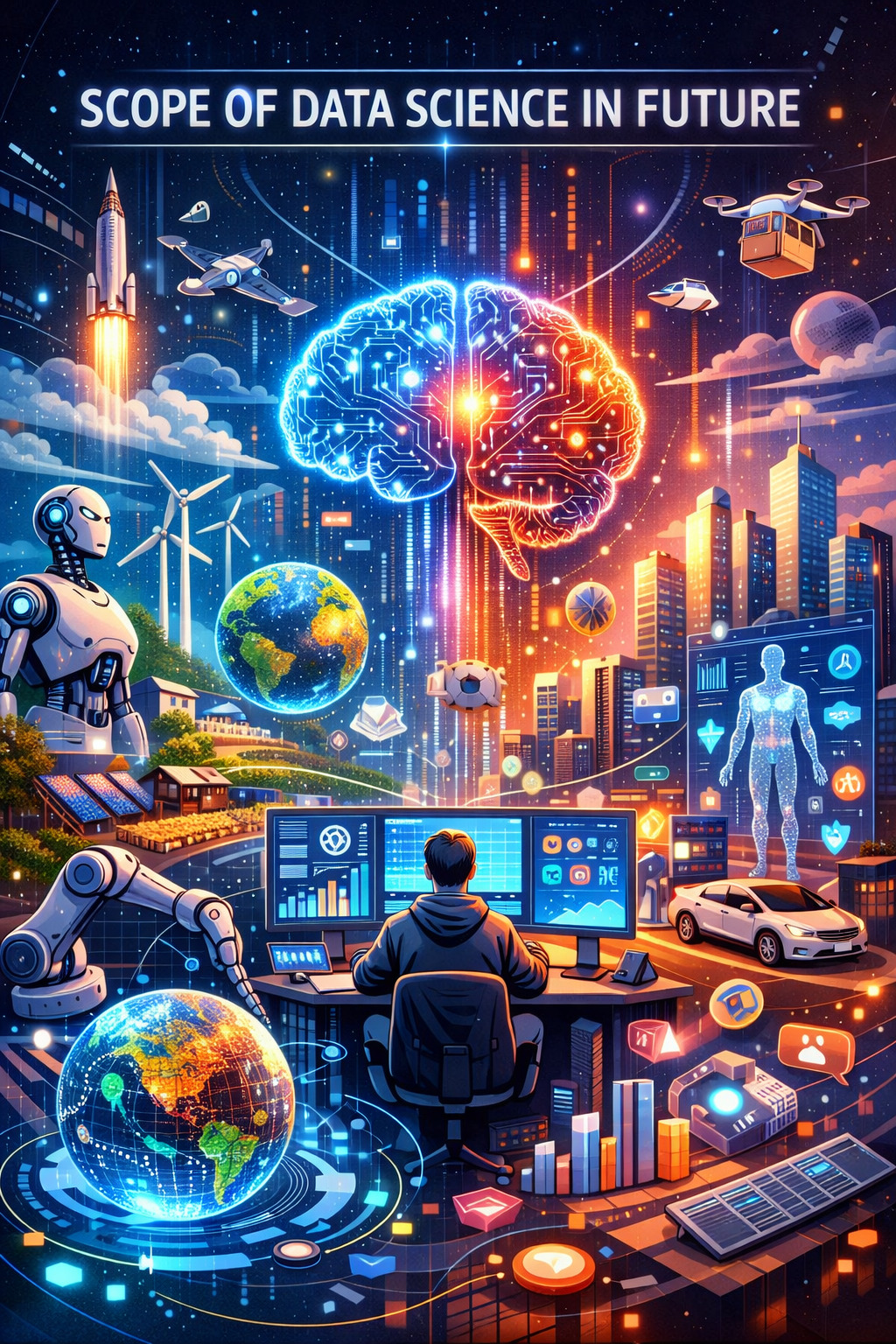
As we explore the scope of data science in the future, it’s clear that the demand for skilled professionals is on the rise. With emerging technologies reshaping how we analyze data, we’ll face new ethical considerations that require our attention. Various industries are already experiencing significant transformations. But what does this mean for our career paths and the responsibilities we hold? Let’s examine the landscape ahead and uncover the opportunities that await us.
Key Takeaways
- The demand for data science professionals is expected to continue growing as organizations prioritize data-driven decision-making in strategic planning.
- Emerging technologies like AutoML, NLP, and Edge Computing will further expand the scope of data science across various industries.
- Ethical considerations, including data privacy and algorithmic bias, will shape the future practices and frameworks in data science.
- Industries such as healthcare, retail, finance, and transportation will increasingly rely on data science innovations for efficiency and improved outcomes.
- Continuous skill development and networking will be essential for professionals to stay competitive in the evolving data science landscape.
The Growing Demand for Data Science Professionals
The demand for data science professionals is skyrocketing as organizations across industries recognize the value of data-driven decision-making. We’re witnessing a surge in job opportunities that stem from the need for effective data analysis. As market trends shift towards a more analytical approach, we must focus on skill acquisition to stay competitive. The growing emphasis on data in strategic planning means that our career growth potential is immense. By leveraging available educational resources, we can enhance our expertise and adapt to the evolving landscape. Together, let’s explore these opportunities and equip ourselves with the necessary tools to thrive in this exciting field. Embracing continuous learning will position us at the forefront of data science and its limitless potential.
Emerging Technologies in Data Science
As we explore the domain of emerging technologies in data science, it’s clear that innovations are reshaping how we analyze and interpret data. The rapid advancements in this field are driven by the integration of machine learning and big data. Here are some key technologies to watch:
- Automated Machine Learning (AutoML) – Simplifies the model-building process, making it accessible to non-experts.
- Natural Language Processing (NLP) – Enhances our ability to extract insights from unstructured data.
- Edge Computing – Enables real-time data processing closer to the source, improving efficiency.
- Blockchain – Guarantees data integrity and security, fostering trust in data transactions.
Together, these technologies are paving the way for more effective data-driven decision-making in various industries.
Ethical Considerations in the Evolving Data Landscape
With the rapid advancements in data science technologies, ethical considerations have become increasingly important. We must prioritize data privacy and address algorithmic bias to guarantee fair outcomes. By developing robust ethical frameworks, we can promote responsible AI practices that meet transparency standards. Consent management is essential, allowing individuals to control their data usage, while fairness metrics help us evaluate our algorithms’ performance. We need to establish accountability measures that hold organizations responsible for their data practices. As we navigate this evolving landscape, it’s our collective responsibility to advocate for ethical practices in data science, making sure that innovations serve society positively and equitably. Together, we can shape a future where ethics and technology coexist harmoniously.
Industries Transformed by Data Science Innovations
Data science innovations are reshaping various industries, driving efficiency and opening new opportunities. We can see significant transformations in several key sectors:
- Healthcare Analytics: By leveraging data, we’re improving patient outcomes through predictive modeling and personalized medicine.
- Retail Optimization: Data-driven insights help businesses manage inventory better, enhancing customer experience and boosting sales.
- Financial Forecasting: Advanced algorithms allow us to predict market trends, enabling more informed investment decisions.
- Transportation Logistics: Data science streamlines supply chains, reducing costs and improving delivery times through route optimization.
These advancements not only enhance operational efficiency but also empower us to develop innovative marketing strategies and agricultural efficiency, ensuring that we stay competitive in an ever-evolving landscape.
How to Prepare for a Career in Data Science
To thrive in a career in data science, we need to cultivate a diverse skill set that blends technical proficiency with analytical thinking. Engaging in online courses can enhance our knowledge in programming, statistics, and machine learning. Additionally, we should actively seek networking opportunities to connect with industry professionals.
Here’s a quick overview of essential components for our preparation:
| Skill Set | Action Plan |
|---|---|
| Technical Skills | Enroll in online courses |
| Analytical Thinking | Join data science meetups |
| Industry Knowledge | Attend conferences |
Frequently Asked Questions
What Specific Programming Languages Should I Learn for Data Science?
We recommend learning Python libraries for data manipulation, R programming for statistical analysis, SQL basics for database management, and data visualization techniques to effectively communicate insights. These skills will greatly enhance our data science capabilities.
How Can I Gain Practical Experience in Data Science?
To gain practical experience in data science, we can work on data projects, seek internship opportunities, and collaborate with others. This hands-on approach helps us build skills and enhances our understanding of real-world applications.
What Are Common Career Paths Within Data Science?
Common career paths in data science include becoming a data analyst or specializing in machine learning. We can explore these roles, focusing on skills and tools that help us thrive in these exciting fields.
Are There Online Certifications for Data Science Worth Pursuing?
Yes, there are valuable online courses offering certifications in data science. We’ve found that these certifications enhance our skills, increase job prospects, and demonstrate our commitment to ongoing learning in this rapidly evolving field.
How Does Data Science Impact Everyday Business Decisions?
Data science impacts everyday business decisions by enabling us to implement data-driven strategies and utilize predictive analytics. This helps us forecast trends, optimize operations, and make informed choices that drive our success and growth.
Conclusion
To summarize, the future of data science is bright and full of opportunities for all of us. As demand for skilled professionals grows and emerging technologies reshape the landscape, we must stay ahead of the curve. By embracing ethical practices and continually enhancing our skills, we can contribute to the transformation of industries like healthcare and finance. Let’s seize this moment to explore the limitless possibilities that data science offers and shape a better tomorrow together.