

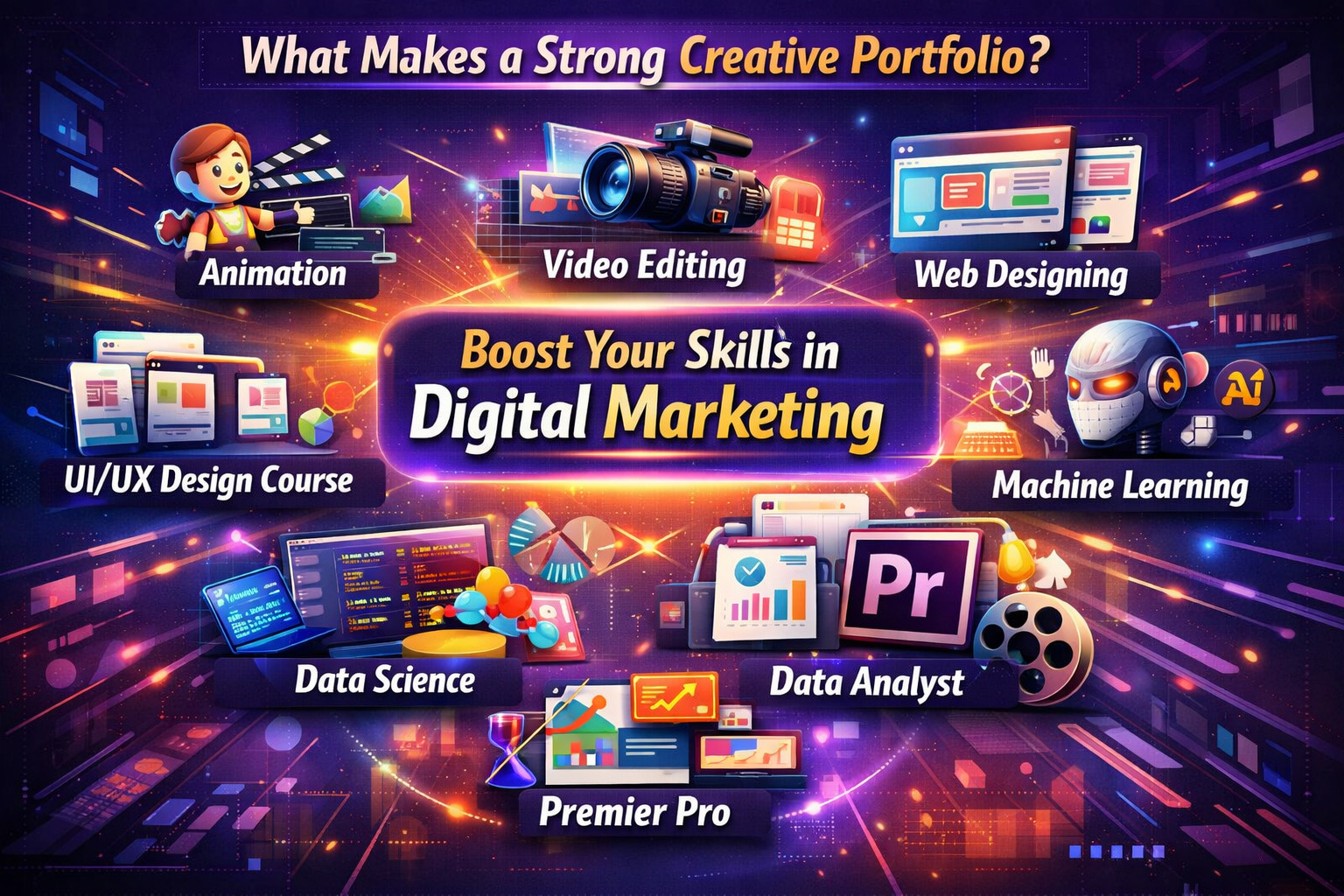
In today’s competitive digital world, having a strong creative portfolio is more important than ever. Whether you are a designer, developer, marketer, or content creator, your portfolio acts as your personal brand. In places like Uttarakhand and especially Dehradun, where creative and digital careers are growing rapidly, a well-built portfolio can help students stand out and get better job and freelance opportunities.
A creative portfolio is not just a collection of your work—it is a showcase of your skills, creativity, problem-solving ability, and professionalism. Companies and clients prefer candidates who can demonstrate their abilities through real projects rather than just academic qualifications.
To build a strong portfolio, students should focus on learning modern, in-demand skills such as Digital Marketing, Python, Animation, Video Editing, Web Designing, UI/UX Design, Machine Learning, Graphic Designing, Data Analysis, and Premiere Pro. These courses help students create practical projects that can be included in their portfolio.
Key Elements of a Strong Creative Portfolio
1. Quality Over Quantity
Include only your best work instead of adding too many projects. A few strong projects make a better impression.
2. Real-World Projects
Showcase projects based on real problems such as website designs, marketing campaigns, or branding work.
3. Clear Presentation
Organize your portfolio properly with clean layouts, descriptions, and easy navigation.
4. Diverse Skills
Include different types of work such as graphics, videos, websites, or campaigns to show versatility.
5. Personal Branding
Your portfolio should reflect your unique style and creativity.
6. Case Studies
Explain your process—what problem you solved, how you worked, and the final result.
7. Updated Work
Keep your portfolio updated with your latest and best projects.
Top Courses to Build a Strong Portfolio
1. Digital Marketing
Digital marketing create real campaigns, social media strategies, and SEO projects.
2. Python
Python build small applications, automation tools, or data projects.
3. Animation
Animation show animated videos, motion graphics, or storytelling projects.
4. Video Editing
Video editing add professional video content like reels, ads, and YouTube videos.
5. Web Designing
Web designing create live websites or UI layouts for your portfolio.
6. UI/UX Design Course
UI/UX Design showcase app designs, wireframes, and user experience projects.
7. Machine Learning
Machine learning include data models, predictions, and AI-based projects.
8. Graphic Designing
Graphic designing add logos, posters, branding designs, and social media creatives.
9. Data Analyst
Data analyst present dashboards, reports, and data insights.
10. Premiere Pro
Premiere pro include high-quality edited videos and storytelling content.
Why Choose These Courses?
-
These courses provide practical, hands-on experience
-
Help in building a professional and job-ready portfolio
-
Cover in-demand skills required by industries
-
Increase chances of getting internships and freelance projects
-
Open opportunities in creative, IT, and marketing fields
Conclusion
A strong creative portfolio is the key to success in today’s skill-based job market. It helps students showcase their abilities, stand out from the competition, and attract better career opportunities. By learning industry-relevant courses such as Digital Marketing, Python, Animation, Video Editing, Web Designing, UI/UX Design, Machine Learning, Graphic Designing, Data Analysis, and Premiere Pro, students can build impressive portfolios and achieve long-term career growth in the digital and creative industries.
FAQs
1. What is a creative portfolio?
A creative portfolio is a collection of your best work that showcases your skills and projects.
2. Why is a portfolio important for students?
It helps employers understand your practical skills and creativity.
3. How many projects should I include in my portfolio?
Focus on quality—5 to 10 strong projects are enough.
4. Can beginners create a portfolio?
Yes, beginners can start with practice projects and improve over time.
5. Which skills are best for building a portfolio?
Skills like graphic design, web design, video editing, and digital marketing are highly effective.