

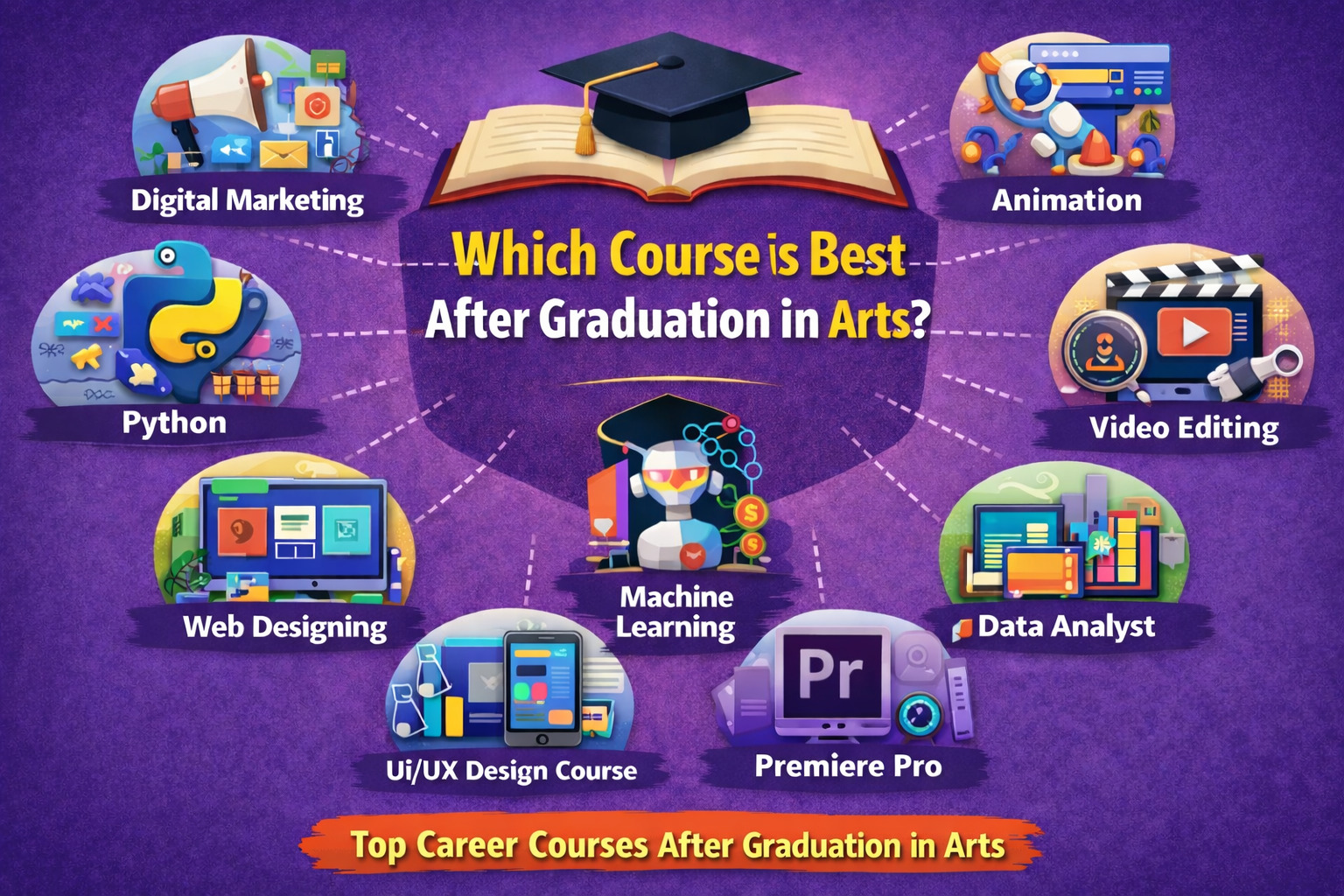
Which Course Is Best After Graduation in Arts
Graduating in arts opens many doors, yet students often feel confused about the next step. The modern job market doesn’t only value degrees; it values skills, creativity, and practical knowledge. That’s why choosing the right professional course after arts graduation can completely transform your career. Today, industries such as IT, media, advertising, and analytics welcome arts students with open arms, provided they’ve got the right training.
This blog promotes 10 powerful courses that can help you step into high-growth careers: Digital Marketing, Python, Animation, Video Editing, Web Designing, UI/UX Design, Machine Learning, Graphic Designing, Data Analyst, and Premier Pro. Let’s explore each path in detail so you can decide confidently.
Why Arts Graduates Need Skill-Based Courses
Arts education builds creativity, communication, and critical thinking. However, employers now expect technical and digital abilities as well. Skill-based courses bridge this gap. They make you job-ready, improve confidence, and open opportunities for freelancing or entrepreneurship.
Many arts students think technical fields are only for science graduates, but that isn’t true anymore. With structured training and practice, anyone can master these courses. What matters most is interest and dedication.
Top 10 Career-Focused Courses
1. Digital Marketing
Digital Marketing is one of the best answers to the question which course is best after graduation in arts. It includes SEO, social media marketing, content marketing, email marketing, and paid ads. Arts students already possess creativity and language skills, which are perfect for this field.
You’ll learn how to promote brands online, increase website traffic, and generate sales. Companies are moving online every day, so the demand for digital marketers is huge. After completing this course, you can work as an SEO executive, social media manager, or freelancer. The best part is you don’t need coding background to start.
2. Python Programming
Python isn’t only for engineers. Arts graduates can also learn it easily because of its simple syntax. Python is used in web development, automation, data analysis, and AI. Learning Python gives you a technical edge and increases salary potential.
Many beginners worry that programming is tough, but with proper guidance, it becomes interesting. Python developers are in high demand across India and abroad. If you want to enter the IT sector quickly, this course is a smart choice.
3. Animation
Animation is perfect for students who love drawing and storytelling. The course teaches character design, motion graphics, 2D and 3D animation. The film, gaming, and advertising industries constantly need animators.
Arts graduates already understand colour theory and creativity, which helps a lot. After this course, you can become an animator, storyboard artist, or VFX designer. It’s a dream career for imaginative minds.
4. Video Editing
Video content rules social media today. Every brand needs editors for YouTube, Instagram, and advertisements. Video Editing courses teach cutting, transitions, sound design, and visual storytelling.
This field welcomes arts students because it requires creativity more than maths. You can work with influencers, media houses, or start freelancing from home. Tools like Premiere Pro and After Effects make editing exciting and professional.
5. Web Designing
Web Designing blends creativity with technology. You’ll learn HTML, CSS, responsive design, and website layouts. Arts students with an eye for design perform very well here.
Businesses need attractive websites to grow online. After this course, you can work as a web designer, front-end developer, or freelancer. It’s a stable and respected career.
6. UI/UX Design Course
UI/UX focuses on user experience and interface design. It’s about making apps and websites easy and beautiful. Arts graduates fit naturally because they understand user psychology and design principles.
This course teaches wireframing, prototyping, and tools like Figma. UI/UX designers earn excellent salaries and can work remotely too.
7. Machine Learning
Machine Learning sounds advanced, yet beginners can start with the basics. It’s used in recommendation systems, chatbots, and automation. Arts students entering this field gain a futuristic career.
The course covers algorithms, data handling, and AI concepts. With dedication, you can become an ML associate or analyst.
8. Graphic Designing
Graphic Designing is a classic favourite for arts students. It includes logo design, posters, branding, and social media creatives. Software like Photoshop and Illustrator are taught.
If you’re creative and love visuals, this course can turn passion into profession. Freelancing opportunities are endless.
9. Data Analyst
Data Analyst courses teach how to read and interpret data using Excel, Power BI, and Python. Even arts graduates can excel because it focuses on logic more than hardcore maths.
Businesses rely on data for decisions, so analysts are highly valued. It’s a growing and secure career option.
10. Premier Pro
Adobe Premiere Pro is the heart of professional video editing. This specialised course trains you in cinematic editing, colour grading, and effects.
Many students choose Premier Pro as a short-term job-ready course. You can start earning quickly through YouTube creators and studios.
How to Choose the Right Course
Don’t choose a course just because friends are doing it. Think about your interests, strengths, and career goals. If you enjoy writing, pick Digital Marketing. If you love visuals, choose Graphic Designing or Animation. For analytical minds, Data Analyst is ideal.
Always check institute reputation, practical training, and placement support before enrolling.
Career Scope and Salary
These courses offer impressive salaries. Digital marketers and UI/UX designers often earn ₹3–8 LPA initially. Data analysts and Python developers can earn even more. Freelancing can multiply income if you build strong portfolios.
Skills Required
-
Creativity
-
Communication
-
Basic computer knowledge
-
Willingness to learn
-
Consistency
Learning Modes
You can learn through classroom training, online live classes, or recorded courses. Practical projects matter more than certificates.
Conclusion
So, if you’re still wondering which course is best after graduation in arts, the answer depends on your passion. All ten courses—Digital Marketing, Python, Animation, Video Editing, Web Designing, UI/UX, Machine Learning, Graphic Designing, Data Analyst, and Premier Pro—offer bright futures. The key is to start, practise daily, and build real projects. Your arts degree is not a limitation; it’s a foundation for a creative and successful career.
FAQs
1. Which course is best after graduation in arts for quick job?
Digital Marketing and Video Editing are fastest because they focus on practical skills and have huge demand.
2. Can arts students learn Python?
Yes, Python is beginner-friendly and many arts students succeed with regular practice.
3. Is UI/UX good for arts background?
Absolutely. UI/UX values creativity and user understanding more than technical degrees.
4. Which course gives highest salary?
Data Analyst, Machine Learning, and UI/UX usually offer the highest starting packages.
5. Can I do freelancing after these courses?
Yes, Digital Marketing, Graphic Designing, and Premier Pro are excellent for freelancing.
6. Do I need maths for these courses?
Most courses don’t require advanced maths except Data Analyst and Machine Learning basics.